.webp)
Windrose’s Ship Customization Problem: Can Naval Progression Deliver the Freedom of a Pirate Captain?
Introduction: When Your Ship Becomes More Than Transportation
In Windrose, a ship is not simply a convenient way to cross an ocean. It is a mobile arsenal, a storage space for hard-earned resources, a gateway to distant islands, and the most visible symbol of a player's progress through an alternative Age of Piracy. The game's combination of survival crafting, exploration, and naval combat makes the vessel central to its identity. Yet this creates an important design challenge: how can a game make ship progression feel rewarding without reducing the player's vessel to a temporary upgrade that must eventually be replaced? This question becomes particularly important when a game promises the freedom of pirate life but initially offers relatively limited opportunities to personalize a ship.
Windrose, developed by Kraken Express and released into Early Access on April 14, 2026, already provides a substantial framework for this experience. Players can explore procedurally generated islands, fight at sea, board enemy vessels, build settlements, recruit workers, and progress through increasingly dangerous regions. The official Steam description presents naval combat as a system shaped by player decisions, including fighting from a distance or closing in for boarding actions. However, the developers have also acknowledged that ship progression and customization need further development. The studio's discussions of its plans for ship customization make this tension especially revealing: the challenge is not merely adding more cosmetic options, but designing a system that lets players express their identity without creating an unmanageable collection of faction-specific ship variants. (Sources: Windrose on Steam; official Steam community announcements.)
This article examines that specific problem through the progression of a typical voyage: obtaining an early vessel, learning naval combat, upgrading into more powerful ships, investing in faction identities, and deciding whether a ship deserves to remain useful throughout a long campaign. The central argument is that Windrose will reach its full naval potential only when ship progression, combat balance, visual customization, and emotional attachment work together. A bigger ship should represent a new strategic possibility, not automatically invalidate everything the player previously built.
1. The First Vessel: Why Early Ship Progression Sets the Rules
From stranded survivor to aspiring captain
The opening stages of Windrose deliberately place survival before naval dominance. After the confrontation with Blackbeard leaves the protagonist shipwrecked, the player must gather resources, establish a foothold, craft equipment, and recover the ability to travel more effectively. This progression gives the first meaningful vessel a narrative function: it represents the transition from being stranded in a hostile world to actively exploring it. The ship is therefore a reward for understanding the game's basic survival loop rather than a vehicle handed to the player without effort.
That transition matters because early progression teaches players how the rest of the game will value their time. If gathering timber, producing planks, and crafting essential materials lead to a noticeable improvement in mobility, the player learns that preparation creates opportunities. Sailing to another island becomes more than a change of scenery; it becomes a decision to expose accumulated resources and equipment to new risks. The vessel begins to connect otherwise separate systems, including crafting, combat, exploration, and settlement development.
The danger of treating every ship as disposable
The design problem begins when a ship is understood primarily as a rung on a ladder. If the player's first serious vessel exists only to be abandoned as soon as the next blueprint becomes available, its emotional and mechanical significance can disappear quickly. The hours spent gathering materials for it become a tax on future progress rather than an investment in a personal possession.
This does not mean that every early ship must remain equally powerful in late-game encounters. A small vessel should not necessarily survive a direct exchange with a heavily armed frigate. Instead, the game needs to give earlier ships reasons to remain useful through speed, maneuverability, lower operating costs, access to particular routes, or a specialized combat role. When each vessel solves a different problem, upgrading becomes a strategic decision. When the next ship is simply stronger in almost every situation, progression risks becoming a repetitive cycle of construction and replacement.
2. Learning the Broadside: Naval Combat Must Reward Decisions
Why positioning matters more than raw firepower
The most promising element of Windrose's naval design is its emphasis on choosing how to engage an enemy. The official game description distinguishes between exchanging cannon fire at range and moving close enough to initiate boarding. These approaches create different risk profiles. A captain who prefers to maintain distance may prioritize a ship's offensive capability and the ability to control an engagement, while a player who wants to board must think about closing the gap and surviving the approach.
This distinction is essential because cannon combat can otherwise become a straightforward comparison of statistics. If the ship with more health and greater damage always wins, tactical movement becomes less important than equipment level. Strong naval combat instead asks players to consider the angle of approach, the timing of their attacks, the distance between vessels, and the condition of their own ship. Even when a more powerful ship has an advantage, a smaller vessel should ideally retain ways to exploit mistakes or avoid an unfavorable fight.
The difference between power and control
Ship progression should therefore increase the player's available options, not simply inflate the numbers attached to a vessel. A larger ship could carry heavier armament and absorb more punishment, while a smaller ship could offer quicker repositioning or make disengagement easier. Such differences create distinct forms of mastery: a heavy vessel rewards deliberate positioning, whereas a nimble ship rewards awareness and the ability to choose favorable engagements.
The challenge for Windrose is to keep these differences meaningful as players acquire better equipment. If upgrades erase a ship's weaknesses, every vessel gradually becomes a more powerful version of the same combat platform. If the weaknesses remain too severe, however, players may feel punished for choosing a ship they like. The strongest solution is not perfect equality, but situational usefulness. A ship can be less effective in a head-on battle while remaining valuable for exploration, resource collection, or rapid travel between islands.
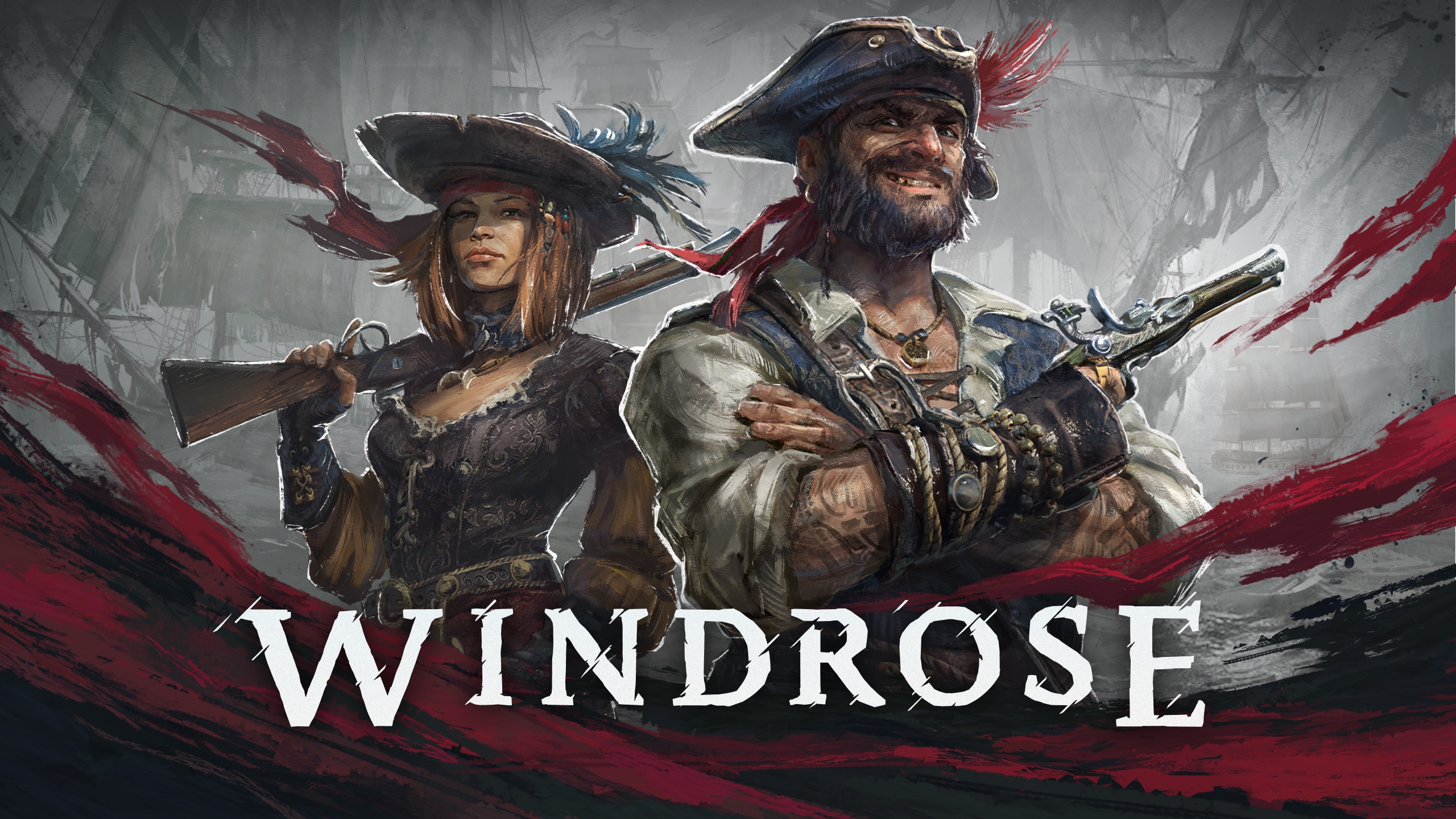
3. From the Ketch to the Frigate: The Cost of Climbing the Ladder
The material economy behind a major upgrade
The transition from a relatively modest vessel to a larger warship is one of the clearest tests of a survival game's progression system. In Windrose, ship construction sits within a broader economy of gathering, crafting, faction activity, and exploration. More ambitious vessels require players to move beyond the materials and production facilities that supported the opening phase. The reward is not only a new silhouette on the horizon, but access to a different level of naval capability.
That structure creates a satisfying loop when every stage has a clear purpose. A player ventures into a new region, collects unfamiliar resources, establishes production capacity, and returns with the materials needed for a meaningful improvement. The ship becomes a visible record of the player's growing competence. The difficulty is that material requirements can feel artificial if they merely delay access to a predetermined upgrade. Resource gathering works best when it sends players into interesting situations, rather than requiring repetitive trips solely because a recipe demands another large stack of materials.
How to make a new ship feel genuinely different
A frigate should change the player's decisions, not just their tolerance for incoming damage. Its increased scale and combat potential should create new advantages, but the game also needs to make the consequences of choosing it understandable. A heavy vessel might be better suited to challenging dangerous enemies and carrying valuable cargo, while a smaller ship might remain attractive for less demanding expeditions.
The important distinction is between progression through replacement and progression through specialization. Replacement says that the newest ship is the correct answer to nearly every question. Specialization says that the player has gained another answer, each with its own strengths and limitations. The second approach creates a richer long-term system because players can choose a vessel based on the purpose of a voyage instead of always sailing the latest blueprint they have unlocked.
A successful progression economy should also make the cost of experimentation manageable. If building a different ship requires so many rare materials that players are reluctant to try alternatives, the system may unintentionally discourage the very variety that ship classes are supposed to provide.
4. Ship Customization: Why Cosmetic Freedom Is a Mechanical Issue
The problem with faction-locked appearances
Ship customization might initially appear less important than cannons, hull strength, or travel speed. Yet the developers' own discussion of the system identifies a specific structural problem: faction-specific ship versions can restrict the range of visual combinations available to players. The studio explained that faction-specific hulls and sails already accounted for much of the visual variation, while some exterior elements were closely tied to particular variants. Changing a ship's overall appearance could therefore require switching to a different faction version.
This is more than a minor inconvenience. A pirate ship is one of the most personal objects in a game built around captaincy. Players may want a vessel that reflects their chosen faction, their preferred colors, or the identity of a crew that has survived numerous voyages. If the visual system forces them to choose between a faction's appearance and the decorative elements they actually want, customization becomes a restricted selection rather than an expression of ownership.
Separating the ship's identity from its faction
The design challenge is to preserve recognizable faction identities without making them rigid packages. A faction can have a distinctive visual language through its colors, insignia, sail patterns, and decorative motifs, while still allowing players to change other parts of the vessel independently. The ship's hull, sails, ornaments, and equipment presentation do not all need to be locked together simply because they belong to the same faction theme.
A more modular system could allow players to select a base hull, choose a sail pattern, apply a faction emblem, and add decorative details as separate decisions. Such a system would also be easier to extend than creating a completely separate model for every combination of ship class and faction. The developers have explicitly pointed to the difficulty of maintaining separate faction versions across a game with more than two factions, including the additional hulls, visual variants, and balance combinations that would need support.
The principle is straightforward: faction identity should give players more ways to personalize their ship, not fewer. If Windrose can separate visual identity from rigid variant selection, customization could become a lasting progression system rather than a small menu of mutually exclusive appearances.
5. Factions and Reputation: Giving Ships a Place in the World
Why faction progression should mean more than unlocking recipes
Faction systems provide a natural way to connect ship development to the wider world. In Windrose, players can interact with factions, complete quests, trade, and develop reputation. These systems could give ship progression a social and narrative dimension: a new vessel or design would represent not only accumulated resources, but also the relationships the player has built during the campaign.
This matters because a ship's appearance can communicate allegiance before combat even begins. A vessel associated with a particular faction can help the player feel embedded in the world's political landscape. But the connection becomes shallow if reputation merely unlocks another recipe and then disappears from the player's decisions. Faction progression is more interesting when it changes what the player can access, how they approach encounters, and which opportunities become available.
The balance between reward and freedom
Faction-linked designs also create a risk. If a particular faction provides the most effective ship or the only practical way to obtain a desired customization option, players may feel compelled to follow that path regardless of their preferred playstyle. A system intended to encourage role-playing can become a checklist of mandatory unlocks.
A better approach would make faction rewards distinct without making one faction the universal best choice. Different designs could emphasize appearance, utility, or a specific strategic role, while the core ship classes remain viable alternatives. Players who value a faction's identity should be able to pursue it without feeling that they have sacrificed every other meaningful option.
This is where visual customization and mechanical progression intersect. If players can express faction allegiance through independent cosmetic elements, they do not necessarily need to sacrifice their preferred ship's role to display that identity. The game can preserve meaningful faction rewards while allowing captains to build vessels around the way they actually enjoy sailing and fighting.
6. Boarding Actions: Connecting Sea Combat to the Survival Game
Why a naval encounter should not end at the cannon volley
One of Windrose's defining promises is the transition between ship combat and boarding actions. Rather than treating naval encounters as isolated exchanges of damage, boarding can turn them into a bridge between two different combat environments. A player may begin by maneuvering around an enemy vessel, then close the distance and continue the confrontation on deck, where character weapons, defensive timing, and close-range positioning become important.
This structure helps distinguish Windrose from a game in which the ship is little more than a moving platform for travel. A successful encounter can involve several stages of decision-making, and the player must decide whether the potential rewards justify the danger of getting close. It also gives the crew and the vessel a shared purpose: the ship delivers the player into the encounter, while the player's personal combat abilities help determine how that encounter concludes.
Designing a meaningful choice between sinking and boarding
For boarding to remain compelling, the rewards should create a genuine trade-off rather than a universally correct answer. Destroying an enemy vessel from a distance could be safer and faster, while boarding might offer different loot, resources, or opportunities. If boarding takes longer but provides no meaningful advantage, players will eventually treat it as an unnecessary interruption. If boarding always yields vastly superior rewards, cannon combat may become little more than a preliminary step.
The strongest design would make the choice depend on context. A player short on health may prefer a cautious ranged engagement. Someone searching for particular supplies may accept the risks of boarding. A damaged ship carrying valuable cargo might be worth capturing, while an aggressive enemy blocking a route may need to be removed quickly.
This flexibility also reinforces the argument for distinct ship roles. A vessel designed around maneuverability may make it easier to approach an opponent under favorable conditions, while a heavily armed ship may excel at weakening targets before the player commits to boarding. Naval combat becomes richer when a ship's strengths influence the decisions available to the captain, rather than merely determining how quickly the enemy's health bar falls.
7. Multiplayer Crews: How Co-op Changes the Value of a Ship
A shared vessel creates shared responsibility
Windrose supports solo play as well as cooperative sessions, with the Steam description listing support for up to eight players. The developers also recommend smaller parties for optimal performance, particularly in the late game. This flexibility makes the ship system especially important because a vessel can become the center of a shared expedition rather than just one player's personal equipment.
In cooperative play, naval combat creates opportunities to distribute attention across different tasks. Players can coordinate movement, decide when to engage, and prepare for a boarding action together. This makes the vessel feel like a shared project whose success depends on more than the captain's equipment level. Upgrading the ship can therefore provide a social reward: a group that has gathered materials and survived dangerous encounters together gains a more capable platform for future adventures.
Avoiding a single dominant answer for every group
However, multiplayer can magnify weaknesses in ship progression. If one vessel is clearly superior in almost every situation, groups may feel obliged to pursue it even when a smaller ship better matches their preferred style. Conversely, if ships differ in ways that are too subtle, players may not notice the value of making a deliberate choice at all.
Cooperative play also raises the importance of clear roles. A useful ship system should let a group discuss what it needs before an expedition: durability for a difficult battle, capacity for a resource run, or mobility for a scouting trip. The choice should create a conversation rather than simply prompt the group to craft the highest-tier vessel available.
The same principle applies to customization. A ship with a distinctive appearance can become a shared memory of a group's adventures. The vessel might carry a chosen emblem, a recognizable color scheme, or decorations associated with a particularly successful campaign. These details are mechanically optional, but they can make the multiplayer experience feel more personal and memorable.
8. The Survival Economy: Why Ship Loss and Repair Need Careful Tuning
Risk must matter without making experimentation miserable
A ship connects a player's equipment and cargo to the wider world, so its condition naturally affects the risks of an expedition. The player may invest time in crafting materials, collecting supplies, and preparing for a voyage. If damage has no meaningful consequence, naval combat can lose tension; if every mistake destroys hours of progress, players may become reluctant to explore or test different tactics.
The balance is particularly delicate in a survival game. Windrose is designed to combine resource management with adventure rather than subject players to relentless punishment for basic needs. The developers' stated direction emphasizes a survival experience that remains challenging without allowing routine survival maintenance to overwhelm exploration and progression. Ship repair and replacement should follow the same philosophy.
Four principles for a healthier repair loop
A well-tuned repair system should support preparation while leaving room for recovery. Four principles are particularly important:
- Make damage legible. Players should understand the condition of their vessel and why a fight has become dangerous.
- Reward preparation. Carrying appropriate materials and planning a route should reduce avoidable setbacks.
- Keep recovery possible. Losing a fight should have consequences, but rebuilding a ship should not automatically erase hours of progress.
- Make repairs serve decisions. The player should weigh whether to continue, retreat, or return to a safe location instead of repeating a tedious maintenance routine.
These principles matter for ship progression because the more expensive a vessel becomes, the more intimidating its potential loss can feel. If a late-game ship requires a large investment, players need to trust that the game provides understandable ways to protect and recover that investment. Otherwise, the ship's increased power may be offset by a growing reluctance to use it in risky situations.
A ship should make the player feel capable of attempting greater challenges, not make every expedition feel like a gamble against an overwhelming replacement cost.
9. The Early Access Challenge: Expanding the System Without Breaking It
Why customization becomes harder as the game grows
The developers' comments about ship variants reveal a common Early Access problem: every new feature creates interactions with systems that already exist. Adding more factions, ship classes, hull designs, decorative elements, and upgrade combinations can produce an enormous number of possible configurations. Each combination may need visual checks, performance testing, and balance adjustments. A design that works for two factions and three ship classes may become much more complicated when the roster expands.
This is why modularity is so important. If every faction requires an entirely separate ship model, expanding faction identity becomes expensive and difficult to maintain. If a common ship framework supports interchangeable visual elements, the developers can potentially add more variety without multiplying every part of the system. A modular approach is not guaranteed to solve every technical problem, but it addresses the structural issue identified in the studio's own explanation.
What should be prioritized first?
The most useful development priorities are those that strengthen several parts of the game at once. A more flexible customization framework would improve player expression while making future faction additions easier to manage. Clearer differences between ship classes would improve combat decisions and give progression more depth. Better connections between faction rewards and ship identity would make exploration and reputation feel more consequential.
New content remains important, but adding more hulls alone cannot solve a weak progression structure. If every additional vessel repeats the same role with slightly higher statistics, the roster will grow without meaningfully expanding the player's choices. Conversely, a small set of clearly differentiated ships can support a surprisingly deep system when their strengths, limitations, and visual identities remain meaningful throughout the campaign.
The game's Early Access status makes this an opportunity rather than a final verdict. The current system provides a foundation, while the developers' acknowledgement of customization limitations shows that they recognize an important area for improvement. The long-term question is whether new content will deepen the relationships between ships, combat, factions, and player identity instead of merely increasing the number of available items.
10. The Future of Ship Progression: From Equipment to Personal Identity
What a mature Windrose ship system should deliver
The ideal outcome is not necessarily a perfectly realistic naval simulator. Windrose combines survival crafting, action combat, exploration, and pirate fantasy, so its ship systems must serve all those elements without allowing one to dominate the experience. Naval encounters need enough tactical depth to reward good decisions, but they should remain approachable. Ship upgrades should feel powerful, but not make earlier choices irrelevant. Customization should allow meaningful expression without creating an unmanageable burden for development.
A mature system would let players select a vessel based on the demands of a voyage, invest in improvements that support their chosen approach, and personalize its appearance without being trapped by rigid faction variants. It would also give players reasons to remember their ships: the vessel that carried a crew through its first difficult battle, the ship used to explore a new biome, or the design that became the recognizable symbol of a long cooperative campaign.
These goals reinforce one another. Tactical variety gives ships practical identities; practical identities make upgrades meaningful; customization makes those ships personal; and personal attachment gives players a reason to care about the risks of sailing them into danger. This is how a collection of equipment can become a defining part of the game's world.
The decisive test: does the next ship create a new adventure?
The best measure of ship progression is not how impressive the newest vessel looks in a dockyard. It is whether obtaining that vessel changes what the player wants to do next. A new ship should encourage a different route, a more ambitious encounter, a new cargo strategy, or a fresh way of approaching an enemy. If it simply makes every familiar task easier, the reward may feel satisfying at first but will have limited long-term value.
Windrose has the core ingredients for a stronger system: ship-to-ship combat, boarding, crafting, faction interactions, exploration, and cooperative play. Its challenge is to make these features reinforce one another. The most successful future updates will be those that turn ship choice into a meaningful strategic and personal decision, rather than treating vessels as disposable steps on a linear ladder of power.
Conclusion: A Pirate Ship Should Be an Investment, Not a Temporary Upgrade
The central challenge facing Windrose's naval progression is not simply a shortage of ship designs or cosmetic options. It is the need to connect the practical value of a vessel with the player's sense of ownership. A ship must be useful in combat, worth the resources required to build and maintain it, and flexible enough to reflect the identity of the captain sailing it. If any one of these elements is neglected, the ship risks becoming either a disposable upgrade or a decorative object with little strategic importance.
The developers' acknowledgement that faction-specific variants restrict customization is significant because it identifies a structural issue rather than merely a demand for more cosmetics. A modular approach to ship appearance, stronger differentiation between vessel roles, and a progression system that rewards specialization could address several weaknesses simultaneously. These improvements would make the existing mechanics more meaningful while giving future factions, ships, and biomes a stronger foundation.
Ultimately, Windrose does not need every ship to be equally powerful or every voyage to be safe. It needs players to have reasons to make different choices. A small ship should offer advantages that a heavy warship cannot replicate; a faction design should communicate identity without limiting personal expression; and a costly upgrade should open new possibilities rather than erase the value of earlier progress. When the ship a player chooses is both a tactical tool and a record of their adventures, sailing becomes more than the journey between islands. It becomes one of the game's most rewarding forms of progression.
110-character summary: Windrose must make ships more than upgrades through tactical roles, modular customization, and meaningful choices.