
The Great Forgery: How Duplication Glitches and Market Manipulation Shattered the Economy of ForgeTax
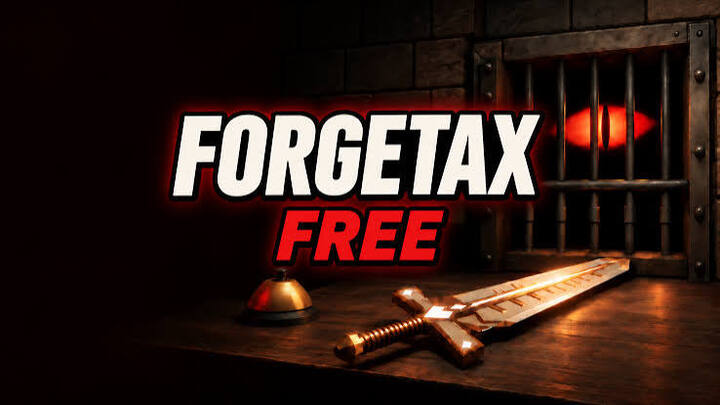
When ForgeTax launched as an ambitious hybrid of dark-fantasy blacksmithing simulation and player-driven mercantile strategy, its central promise was uncompromising economic realism. Unlike conventional role-playing games where gold drops endlessly from defeated monsters and inflation is an inevitable afterthought, ForgeTax built its entire identity around scarcity, craftsmanship, and fiscal accountability. Every ingot smelted, every enchanted blade tempered, and every merchant caravan dispatched across its contested provinces carried tangible weight, taxed dynamically by player-governed guild halls and regional treasuries. For months, players marveled at how a single masterwork greataxe could fund an entire border garrison, or how a sudden shortage of northern star-iron could trigger genuine diplomatic crises between rival trading syndicates. Yet beneath the clanging anvils and intricate ledger systems lurked a catastrophic technical flaw that would ultimately bring the entire simulation to its knees: a persistent packet-desynchronization duplication glitch combined with coordinated market manipulation by elite mercantile cartels.
What began as an obscure inventory bug whispered about in private voice channels rapidly escalated into an existential economic crisis that hollowed out the game’s core loop. Because ForgeTax tethered progression, political power, and territory control directly to accumulated wealth and rare material reserves, the ability to duplicate high-tier alloys and pre-minted tax bonds effectively broke the social contract holding the community together. Honest artisans who spent weeks mining deep-vein ores and mastering multi-stage forging mini-games suddenly watched their life’s work become worthless overnight. Meanwhile, shadowy syndicates weaponized the duplicated wealth to corner regional auction houses, manipulate municipal tax brackets, and lock casual players out of endgame content. Tracing how this single vulnerability unraveled one of the most intricate virtual economies ever designed reveals critical lessons about trust, game architecture, and human greed in persistent online worlds.
The Architectural Foundations of Scarcity in ForgeTax
To understand why the duplication crisis proved so devastating in ForgeTax, one must first examine how tightly coupled its crafting and taxation mechanics were. At the heart of the game was the Closed-Ledger Resource Model, a design philosophy ensuring that raw materials entered the world strictly through finite regional nodes and exited permanently through item durability decay, siege destruction, and mandatory treasury tithes. Nothing existed in a vacuum; if a player wanted to forge a Runic Bastion Shield, they needed verified timber from the southern provinces, purified flux from alchemical guilds, and stamped tax receipts proving regional tariffs had been paid in full.
This interdependence created a thrilling ecosystem where every profession mattered. Miners relied on guards to protect deep shafts, blacksmiths depended on stable tax rates to turn a profit, and local governors balanced infrastructure spending against the risk of driving merchants to rival towns. Because the game lacked traditional NPC vendors selling infinite supplies, human players served as the sole engine of supply and demand. For the first four months after release, this delicate equilibrium produced unforgettable emergent storytelling, turning routine supply runs into high-stakes political maneuvers and rewarding genuine specialization over mindless grinding.
The First Whispers of Packet Desynchronization
The earliest signs of trouble surfaced quietly roughly five months into the game’s live service lifecycle, initially dismissed by community moderators as isolated server lag complaints. Players trading high-value ingots across the border between the Free City of Vaelen and the Iron Marches noticed occasional rollbacks whenever a regional zone transfer coincided with a guild bank deposit. While most users reported losing items to these hiccups, a small circle of technically minded players realized the reverse was also possible under precise network conditions.
By intentionally throttling upload bandwidth at the exact millisecond a player initiated a cross-zone guild ledger transfer while simultaneously listing the same stack on a local tax-exempt stall, the server failed to reconcile the two database writes before the zone handoff completed. The result was clean, untraceable duplication: the original stack remained safely inside the guild vault, while an identical stack materialized in the buyer’s inventory. Because the duplicated items retained legitimate origin metadata—complete with forged artisan signatures and valid tax stamps—the automated anti-cheat audits saw nothing unusual on the surface.
Anatomy of the Guild Ledger Exploit
Unlike crude item-dropping bugs in simpler games, the ForgeTax duplication method exploited the asynchronous architecture connecting regional trade servers with the central taxation database. Understanding how this mechanism functioned highlights just how vulnerable complex virtual economies become when performance optimization prioritizes speed over strict transactional locking.
The Asynchronous Validation Gap
To prevent massive lag spikes during peak trading hours, ForgeTax’s engineers separated physical inventory management from tax verification. Regional servers handled immediate item movement, while a centralized ledger daemon processed tax deductions and ownership transfers in batches every few seconds.
Exploiting the Two-Phase Commit Failure
When exploiters forced a connection timeout right between the local inventory deduction and the central ledger confirmation, the rollback protocol defaulted to preserving player assets rather than deleting them—a standard safeguard meant to protect innocent players from losing gear during crashes.
- Step One The Bait Listing: An exploiter placed a stack of rare Mithril-Core Ingots into a merchant stall right along a provincial border line.
- Step Two The Simulated Outage: Using a simple network limiter, the player induced ninety-percent packet loss while clicking the transfer button to move the same ingots into a guild treasury.
- Step Three The Parallel Claim: An accomplice positioned on the adjacent server node immediately purchased the listed stack before the timeout registered, forcing both databases to commit separate valid records.
From Secret Exploitation to Industrialized Cartel Operations
For nearly three weeks, knowledge of the exploit remained tightly guarded within a handful of elite guilds known collectively on community forums as the Velvet Syndicate. Rather than flooding the market immediately—which would have triggered emergency developer intervention—these groups operated like sophisticated white-collar criminals. They established shell guilds, laundered duplicated raw materials through legitimate-looking crafting orders, and slowly accumulated staggering reserves of liquid gold and untraceable tax bonds.
During this quiet accumulation phase, ordinary players began noticing subtle anomalies that defied natural economic logic. Rare components like Aether-Spun Silk and Dragonbone Splinters suddenly appeared in bulk quantities at prices slightly below historical production costs, squeezing independent gatherers out of business. Whenever honest guilds attempted to undercut these suspiciously cheap listings, the Syndicate used its infinite liquidity to buy out the entire market, relisting the goods hours later at exorbitant markups once local competitors had been bankrupted.
Weaponizing the Municipal Tax System
What transformed this exploit from a standard item-duplication scandal into a uniquely ForgeTax catastrophe was how the cartels weaponized the game’s signature political mechanic: dynamic regional taxation. In ForgeTax, whichever guild controlled a city’s central mint and contributed the highest volume of tax revenue gained voting control over local tariff rates, stall rental fees, and crafting surcharges.
Armed with bottomless reserves of duplicated gold and pre-stamped tax vouchers, cartel fronts systematically bought out governance seats across the game’s major trading hubs. Once installed in power, they enacted predatory fiscal policies designed to crush non-affiliated players.
- Exorbitant Crafting Tariffs: Independent blacksmiths attempting to use public masterwork forges faced forty-percent production taxes, making legitimate crafting mathematically unprofitable.
- Selective Tax Rebates: Cartel members utilized custom guild charters to grant themselves ninety-five-percent tax exemptions on bulk exports, ensuring their monopolies remained untouchable.
- Artificial Resource Embargoes: By hiking transit tolls on key mountain passes, syndicates trapped rival caravans in border zones before ambushing them with endlessly funded mercenary companies.
Hyperinflation and the Collapse of Artisan Progression
By the seventh month of live operations, the dam finally broke. A disgruntled former member of the Velvet Syndicate leaked a step-by-step guide detailing the guild ledger exploit on public social media platforms, triggering a gold rush of copycat exploiters across every server cluster. Within forty-eight hours, ForgeTax’s carefully balanced economy spiraled into full-blown hyperinflation.
Basic consumables that once cost a handful of copper pieces skyrocketed into millions of gold coins. The auction house UI literally broke under the strain of twelve-digit price tags, forcing players to revert to primitive bartering using high-tier crafting reagents as makeshift currency. Worse still, the core progression loop disintegrated entirely; why spend forty hours leveling up metallurgy skills and negotiating trade routes when a freshly created character could buy a fully upgraded endgame citadel within ten minutes using duplicated currency from grey-market sellers?
The Psychological Toll on Honest Crafters
Beyond broken spreadsheets and ruined leaderboards, the economic collapse inflicted severe psychological fatigue on the game’s most dedicated community members. ForgeTax had attracted a passionate niche of players who genuinely loved spreadsheet optimization, logistical planning, and slow-burn roleplay. Watching months of honest labor evaporate into digital dust left veteran players feeling betrayed not only by the cheaters, but by the silence of the development team during the critical early weeks of the crisis.
Guild halls that once buzzed with nightly negotiations fell eerily silent. Master smiths held mock funerals for their characters, tossing priceless, legitimately forged weapons into volcanic fissures before uninstalling the client. The sense of shared accomplishment—the invisible glue holding any sandbox MMO together—dissolved into widespread cynicism, with every wealthy player automatically suspected of cheating and every rare item tainted by the assumption of illegitimacy.
Developer Paralysis and the Debate Over a Full Server Wipe
As concurrent player counts plummeted by more than seventy percent over a single month, the ForgeTax studio found itself trapped in an impossible dilemma. Tracing every duplicated item across millions of interconnected player trades, tax ledgers, and melted-down alloy combinations proved computationally infeasible. Because duplicated ingots had been smelted into weapons, traded across dozens of innocent buyers, and taxed into municipal treasuries, surgical deletion risked punishing legitimate players while leaving laundered wealth intact.
The community fractured bitterly over the proposed solutions. A vocal majority demanded a complete server wipe—rolling the entire game world back to its launch state after patching the network desynchronization flaw. Conversely, a smaller but fiercely committed faction of verified clean players argued that erasing six months of legitimate character progression and guild history would kill the game permanently. The studio’s hesitation to commit decisively to either path prolonged the agony, leaving the servers in a zombie state where nobody dared invest time or effort into a world that might be erased the following Tuesday.
The Rollback Aftermath and Rebuilding Trust
Ultimately, the developers opted for a hybrid approach dubbed the Great Audit: patching the asynchronous ledger vulnerability with strict transactional locks, freezing all player-to-player gold transfers for two weeks, and executing a targeted wealth cap that converted excess currency and suspiciously large material stacks into non-tradeable cosmetic titles. While technically impressive, the intervention arrived too late to restore the magic of the original economy.
When trading finally reopened, the vibrant, chaotic marketplace of ForgeTax had been replaced by rigid automated price ceilings, mandatory trade cooldowns, and heavy-handed anti-cheat friction that made everyday commerce feel sluggish and bureaucratic. To stop the cheaters, the developers had been forced to strip away much of the economic freedom that made the game revolutionary in the first place.
Lessons for the Future of Player-Driven Virtual Economies
The rise and fall of ForgeTax’s economy stands as a stark cautionary tale for designers building ambitious virtual worlds. When a game’s core appeal rests on scarcity, player governance, and real economic consequences, technical security cannot be treated as a secondary concern behind feature development. Every network shortcut, asynchronous database write, and convenience rollback becomes a potential weapon in the hands of organized exploiters looking to extract disproportionate power.
More importantly, the crisis demonstrated that virtual economies run on human faith just as much as code. Once players lose confidence that rules apply equally to everyone—and that effort correlates reliably with reward—no amount of clever tax mechanics or political simulation can keep a digital society from collapsing from within. ForgeTax survived as a cautionary footnote in gaming history, proving that in worlds built on coins and ledgers, integrity is the only currency that cannot be forged.